


Did you know it is possible to sell a home without being there in person? At first glance, selling a home from afar may feel too complicated to take on. After all, how would you handle repairs, access for showings, and paperwork when you don’t live nearby?
This scenario is common in the DMV (the D.C., Maryland, Virginia region). Your property is here, but you need to handle everything from another state.
While distance can add stress to an already emotional or financially complex situation, partnering with the right real estate professionals makes the difference. A reputable direct home buyer you trust can guide you through the entire process with relative ease.
Absentee home sales come with extra moving pieces, but none of them are insurmountable. When you understand your responsibilities, choose reliable partners, and create a simple plan for access and communication, you give yourself room to breathe.
We’ll walk you through what you need to know to make decisions that support your goals and timeline.
Understanding the Realities of Absentee Home Sales
There are many reasons a homeowner may need to complete a long-distance sale. You may have inherited a property in Baltimore while living across the country, retained a former residence in Washington, D.C., after a work-related relocation, or held onto a rental property in Northern Virginia that no longer aligns with your plans. Regardless of the circumstances, you are now responsible for a home you cannot easily access.
One of the most immediate concerns is the property’s condition. Coordinating repairs, showings, and inspections is more complicated when you cannot be present. If the home is vacant, additional risks may arise, including trespassing, utility issues, or maintenance problems that go unnoticed. These factors often influence how absentee owners evaluate their selling options.
Beyond the property itself, absentee home sales frequently involve added emotional and financial considerations. Some transactions unfold during probate, divorce, or while resolving tax liens or mortgage complications. Ongoing holding costs, HOA dues, and repair decisions can create additional pressure when managed remotely.
For homeowners seeking a more controlled and predictable process, selling to a cash buyer can minimize uncertainty. Focusing on the following four considerations can reduce surprises and support a smoother path to closing.
1. Organize Ownership and Legal Documentation Early
One of the most helpful steps you can take is organizing the documents related to the property. The more comprehensive the paperwork, the more easily buyers, title companies, and attorneys understand what is needed to close.
In preparation for selling the home, gather items such as the deed, mortgage statements, tax bills, and HOA documents. If the house is in probate, you may need letters of administration, a will, or court authorizations showing who has the right to sell. When multiple heirs or co-owners are involved, aligning everyone’s plans can help avoid later disputes.
Consider consulting a title company or attorney to understand the timeline and required documents. Many sellers appreciate the reassurance that they are handling everything correctly, especially when selling from outside the region.
2. Create a Reliable Plan for Property Access
Coordinating access is one of the most essential parts of absentee home sales. Since you cannot be there, you want a process that protects the home while allowing the sale to move forward efficiently.
You may ask a trusted neighbor, friend, or relative to help you by checking on the property or meeting service providers. Some sellers hire a local property manager for limited support, such as unlocking the door for inspectors or confirming that contractors completed work.
Another option is using an exterior lockbox for your house key or installing a smart lock you control remotely. Only those with the combinations or codes can access your home.
You may also request photos or videos after any visit to document the home’s condition. Reputable buyers and inspectors respect your need for transparency and communicate clearly about who is entering the house.
A simple access plan reduces stress. You’ll keep your sale moving even when you’re hundreds or thousands of miles away.
3. Decide Which Selling Strategy Fits Your Situation
As with any home sale, you have several options: listing on the open market, selling directly to an individual buyer, or working with a company buying houses for cash. Each option functions differently and supports different goals.
Listing traditionally may result in the widest pool of buyers. However, it often requires repairs, cleaning, staging, and ongoing showings. All are more complicated tasks to manage remotely. You also depend on a buyer’s financing, which may create uncertainty in your timeline. If you have flexibility and the property is in strong condition, this path may work well.
Selling directly to a buyer through a private sale may reduce some steps. However, you still handle inspections, repairs, and scheduling. You may also need to travel if complications arise.
For a faster, simpler path, a cash buyer may be the best fit. A reputable company offers a clear cash offer, buys the home as-is, and closes on a predictable timeline. Many absentee sellers value this option because they do not want to manage contractors or prepare the house for listing. When certainty and speed are your goals, a direct sale often aligns best.
4. Protect Yourself From Scams While Selling From Afar
Absentee sellers sometimes attract less reputable investors who rely on pressure, vague promises, or misleading contracts. Protecting yourself begins with a few straightforward steps.
Ask any potential buyer for proof of funds and request a clear written contract. Confirm which local title company will handle closing, and verify its legitimacy. You may also peruse online reviews, business history, and Better Business Bureau ratings to understand how the buyer operates.
Wire fraud also poses a risk; therefore, always confirm wiring instructions directly with the title company. A quick phone call to a verified number may prevent significant stress and loss. Reliable buyers welcome questions, openly explain their process, and encourage you to take the time you need to feel comfortable.
You deserve clarity at every step, especially when you are managing a sale from another state. If communication feels rushed or confusing, you have the right to slow down and reassess.
How a Local Cash Homebuyer May Simplify the Process
Many absentee sellers turn to local cash buyers when they want predictability and relief from hands-on management. The process typically begins with a simple conversation about your property and timeline. The buyer will evaluate the home using local market data and then provide a transparent cash offer.
If you decide to move forward, you can sign documents electronically and then choose a closing date that fits your needs. In many cases, you can close without traveling, thanks to e-signed documents and remote notarization.
A streamlined process helps you move forward without juggling repairs, showings, or conflicting schedules. Most importantly, you gain peace of mind knowing the sale will close without the uncertainty of financed buyers or lengthy negotiations.
Move Forward With a Stress-Free Absentee Sale
Selling a home from out of state may feel complicated. Rest assured, you can navigate each step with confidence when you find the right real estate professional. You’ll need to organize your documents, set up access, and choose a selling strategy that aligns with your timeline.
When you are ready, find a real estate professional you trust and discuss your options. You deserve a process that supports your needs and respects your time. With the right plan, you can complete an absentee home sale smoothly and quickly, putting the whole thing behind you.
Video


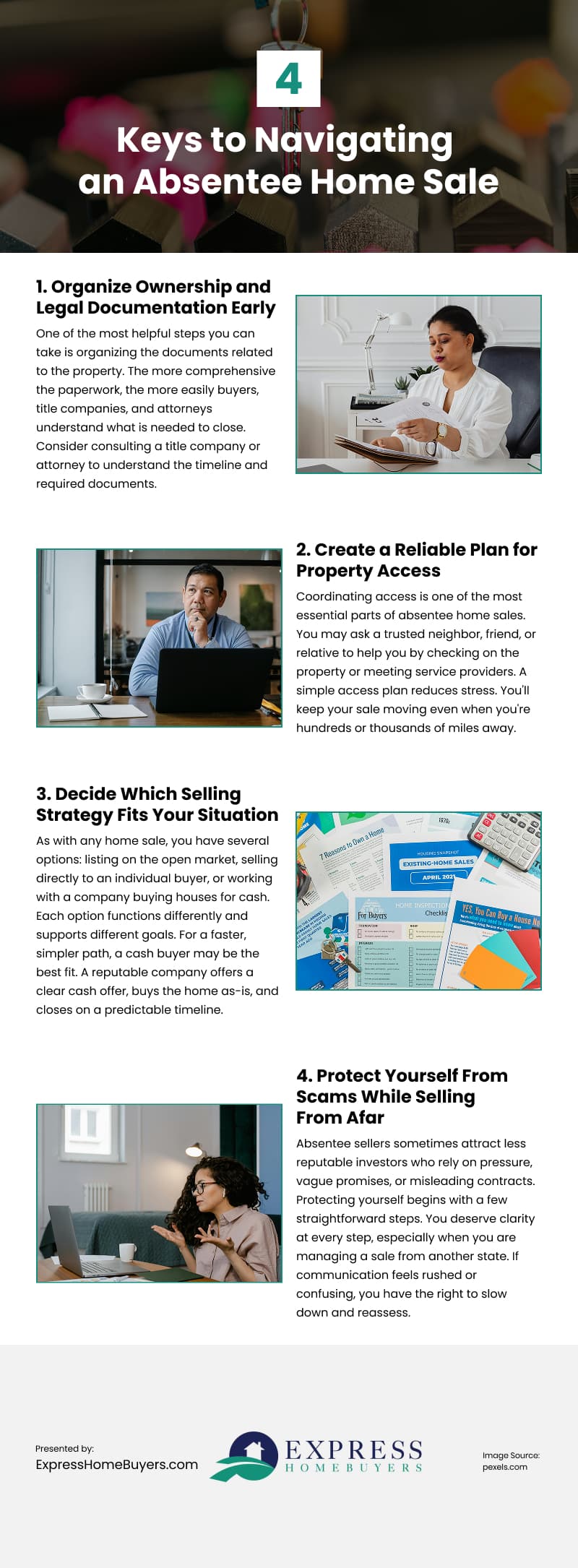
Infographic
Selling a home from a distance can be challenging, but a structured plan helps simplify the process. Many homeowners choose cash buyers to reduce uncertainty and speed up timelines. Check out this infographic for key tips for managing an absentee home sale effectively.