



The art of negotiation isn’t something most people have mastered. And when you’re selling a home, it’s difficult to detach from the emotions and make wise bargaining decisions about something so personal. Yet the way you navigate those emotions can ultimately determine how much you net.
Even in strong markets, the final price often depends less on the initial offer and more on how you respond, what you prioritize, and how clearly you understand your leverage. When you enter into negotiations adequately prepared, you can protect your equity and reduce stress.
Selling a home often comes with time pressure or personal circumstances that make negotiation feel uncomfortable. You may worry about pushing too hard or losing a buyer altogether. But understanding the negotiating process and having a strategy in place up front will help you get through the process without compromising your sanity.
1. Start With a Clear Understanding of Your Priorities
The real work happens before negotiating ever begins. Take stock of your entire situation to gain clarity on what matters most, and be realistic. You benefit when you know what “best price” actually means for your situation. For some of you, the highest number matters most. For others, speed, certainty, or fewer contingencies carry more weight.
When you define your priorities early, decisions become easier in the moment. You avoid reacting emotionally to offers or counteroffers. Instead, you can evaluate each proposal based on how well it supports your goals.
This clarity also helps you communicate effectively. Buyers respond better when expectations feel consistent rather than shifting throughout the process.
2. Price Strategically From the Beginning
Your list price sets the tone for every negotiation that follows. Pricing too high often leads to longer market time and weaker leverage later. Pricing thoughtfully creates interest and puts you in a strong position to negotiate.
Buyers tend to respond more favorably when a price feels grounded in reality. Multiple interested buyers strengthen your position and reduce pressure to concede early. When you attract the right audience, negotiations focus on value rather than correcting unrealistic expectations.
A well-supported price also protects you during appraisals and inspections. When your price aligns with market data, negotiations stay centered on terms rather than justification.
3. Understand What Buyers Really Negotiate Over
Price is only one part of the negotiation. Buyers often focus on terms that protect their risk or are convenient for them. These details subtly influence the strength of an offer.
Common negotiation points include:
- Inspection timelines and repair requests
- Closing dates and possession terms
- Contingencies tied to financing or other sales
Evaluate offers holistically. A slightly lower price with cleaner terms may net you more certainty and less stress. Understanding this balance helps you focus on the big picture.
4. Stay Grounded During Inspections and Requests
Inspections often reopen negotiations. Buyers may request repairs, credits, or price reductions based on their findings. This stage feels personal for many sellers, but it works best when handled calmly.
You do not need to agree to every request. Focus on health and safety issues rather than cosmetic preferences. When you respond thoughtfully, you signal confidence rather than defensiveness.
Knowing your limits matters here. Decide in advance what you are willing to address and what you are not. This will serve as a guardrail to prevent negotiations from spiraling out of control and to help you maintain your position.
5. Use Time as a Strategic Tool
Buyers are often under strict timelines, so the timing of your deal may be critically important to them. A buyer without deadlines will show flexibility, while buyers with them may push harder for concessions.
Understanding your buyer’s timeline strengthens your negotiating power. A buyer facing a lease expiration or relocation deadline may prioritize certainty over price. A buyer with no pressure may test boundaries more aggressively.
Your own timeline matters too. When you are clear about how quickly you need to sell, you can decide whether speed or price takes priority. Understanding these dynamics will help you determine how much leverage you have in the process.
6. Keep Emotions Out of the Process
Homes carry memories, effort, and personal history. Negotiations become harder when emotions take over. Buyers may criticize aspects of the house as part of negotiation tactics, and those comments often feel unfair.
You benefit when you view these negotiations as a business conversation rather than a judgment about something as personal as your home. Staying calm helps you respond strategically rather than defensively.
Responding emotionally will only lead to rushed decisions or unnecessary concessions. A steady approach keeps discussions productive and focused on outcomes rather than feelings.
7. Know When Certainty Outweighs the Highest Offer
The strongest offer is not always the one with the highest number. Offers with heavy contingencies, long timelines, or uncertain financing introduce risk. Deals fall apart more often than many sellers expect.
Certainty often carries value of its own. An offer that closes on time, with fewer conditions, may protect you from needing to relist the house, pay additional carrying costs, or reopen negotiations later.
Evaluate your offers based on how likely each one is to reach the finish line. A smooth closing often delivers more peace of mind than a higher number followed by weeks of uncertainty.
8. Protect Yourself With Clear Communication
Clear communication sets the foundation for productive negotiations. Transparent expectations decrease misunderstandings. Buyers feel more confident when they understand where you stand.
You protect your position by responding promptly and consistently. Delays or mixed messages weaken leverage and invite pressure. Calm, steady communication keeps negotiations moving forward without escalation.
Written agreements matter as well. Verbal ones promise absolutely nothing if they do not appear in the contract. Reviewing documents carefully helps you avoid surprises after negotiations conclude.
9. Recognize When Walking Away Is the Right Move
Not every negotiation leads to a deal. Knowing when to walk away protects your long-term interests. Buyers who push for excessive concessions or repeatedly change terms often create more stress than value.
Walking away does not mean failure. It signals that you value your time, boundaries, and priorities. In many cases, stepping back leads to stronger offers shortly afterward.
Confidence grows when you trust your judgment rather than feeling pressured to accept unfavorable terms.
Negotiating With Confidence as a Seller
Negotiation works best when you walk into it with your eyes open. You secure the best home price by understanding your goals, evaluating offers holistically, and staying grounded throughout the process.
But at the end of the day, negotiating isn’t for everyone. Whether you have deep emotional attachments to a property or would rather turn the entire process over to an expert, there is an option that may appeal to you. You can consider selling your home for cash.
Instead of going through traditional negotiations, a direct homebuyer will evaluate your home and make you a no-obligation offer. No negotiating needed. A reputable buyer will treat you respectfully and make a fair offer based on the location and condition of your home. To make it even better, they can close fast and move according to your preferred timeline.
Selling your home is a significant decision. However you decide to proceed, you will want to take the initial step of understanding your priorities. These priorities will guide your decisions and negotiations, making the process smoother.
Video
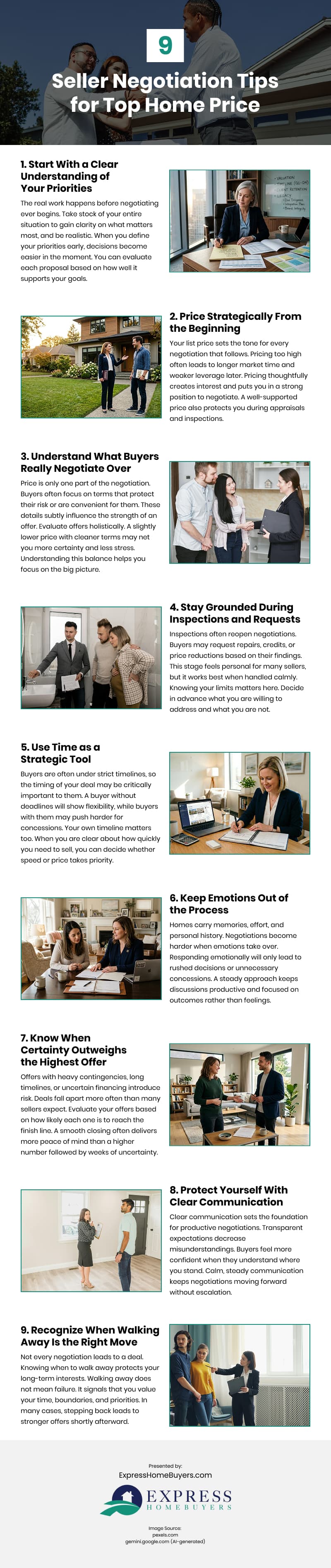
Infographic
Selling a home can feel overwhelming, especially when you’re facing tight timelines or personal challenges. With a clear strategy, you can stay confident and focused on achieving your goals. Explore this infographic for practical tips on negotiating the best price for your home.