

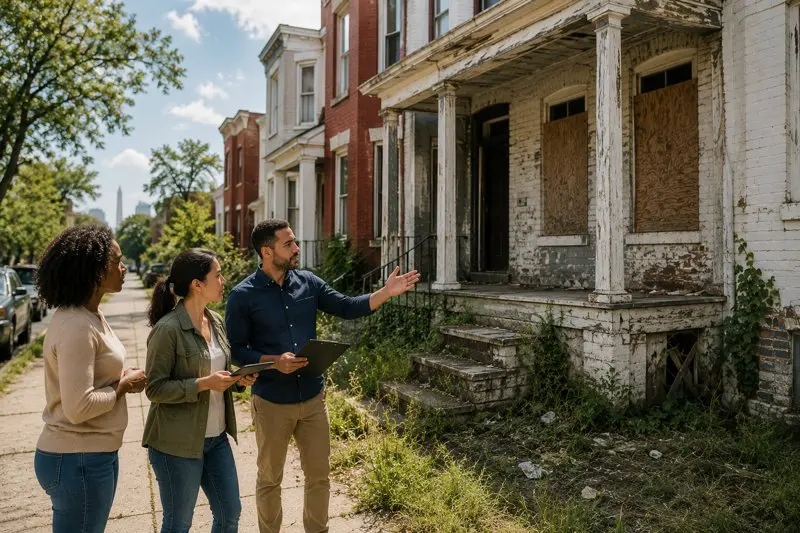

Real estate prices are soaring in Washington, D.C., and neighborhoods are changing fast. Against that backdrop, a vacant property is not just sitting still. It is actively working against you.
Every month a home sits empty, it drains your finances, invites risk, and loses ground in one of the most competitive housing markets in the country. If you own a vacant property in D.C. and are unsure how to move forward, selling your home as-is to a cash buyer may be the fastest and most practical way out.
The Real Cost of a Vacant Property
Most homeowners underestimate the true cost of a vacant property. The most visible expenses are property taxes, utilities, and basic maintenance. Those bills arrive whether anyone lives in the home or not.
Vacant properties come with less obvious costs that add up just as fast.
Empty homes attract vandalism and break-ins. A single incident of property damage can cost thousands of dollars to repair. The longer a home sits empty, the more likely it is that the damage will compound.
Squatters present another serious problem. Once someone occupies a vacant property without permission, removing them requires legal action. That takes time and money. Not to mention, the property often sustains damage in the process.
Additionally, vacancy affects neighbors. A neglected, uninhabited home pulls down surrounding property values and signals to potential buyers that the neighborhood isn’t well-maintained. That perception affects your home’s value and your ability to sell at a fair price, the longer you wait.
Negotiations add another layer of financial risk. If you eventually list the property traditionally, buyers will use every visible sign of deferred maintenance to push the price down or demand repairs. The longer a home sits vacant, the more ammunition a traditional buyer has at the negotiating table.
Why Traditional Sales Fall Short for Vacant Properties
Listing a vacant property on the open market presents specific challenges. Lenders often refuse to approve mortgages for homes in poor condition, immediately shrinking your pool of potential buyers. The buyers who do make offers typically expect you to make the home market-ready or will factor the cost of repairs into a lower offer price.
From there, inspections and appraisals introduce new variables. A buyer can return after an inspection with a list of repair demands or a request to reduce the price. At that point, you face the same three options that come up in any difficult negotiation:
- Pay for the repairs.
- Accept less money.
- Risk losing the buyer entirely and starting over.
For a property that has already been sitting vacant, starting over is a costly option.
What’s more, this entire process can stretch over months. During this time, you continue paying taxes, insurance, and maintenance on a home that generates nothing in return.
Cash Sales Offer a Faster Way Out
Cash homebuyers in Washington, D.C., purchase properties in any condition, making them a practical solution for homeowners facing vacant homes. They do not require repairs, appraisals, or lengthy negotiations. They bring their own funds to the table, so you don’t wait on lender approvals or risk losing financing at the last minute.
The straightforward process begins with you contacting a local cash homebuyer. They assess the property and present an offer. If you accept, they handle most of the paperwork and coordinate the closing. Cash buyers typically close in as little as 7-14 days, which means you stop paying holding costs almost immediately.
For a vacant property, that speed is more than convenient. It is financially significant. Every week you eliminate from the timeline is another week you don’t pay taxes, utilities, insurance, and maintenance on a home that no longer serves you.
The Ripple Effect of a Cash Sale
Cash buyers who purchase vacant properties in D.C. typically invest in rehabilitating them. They bring the home up to code, make necessary repairs, and return the property to productive use, either by reselling or renting it. That process benefits the surrounding neighborhood by reducing blight, stabilizing property values, and filling a vacancy that would otherwise continue to drag on the area’s appeal.
This is not the primary reason to sell, but it is worth understanding. A fast cash sale does not just solve your problem. It removes a liability from the neighborhood and replaces it with an asset.
When a Cash Sale Makes the Most Sense
A cash sale is worth serious consideration when:
- You are paying ongoing holding costs on a property that generates no income.
- The home needs repairs you do not want to manage or pay for.
- You want a predictable closing timeline without the uncertainty of a traditional sale.
- The property has been vacant long enough that deferred maintenance is a liability.
In each of these situations, the math tends to favor a fast sale over a prolonged one. The difference between what a cash buyer offers and what a traditional buyer might offer after months of negotiations, repairs, and carrying costs is often smaller than homeowners expect. Sometimes, it tips in the cash buyer’s favor entirely.
Take the Next Step
A vacant property in D.C. is a problem that gets more expensive the longer it sits. If you are ready to stop absorbing those costs and move forward, contact trusted cash homebuyers in Washington, D.C., today for a fair offer and a straightforward closing.