


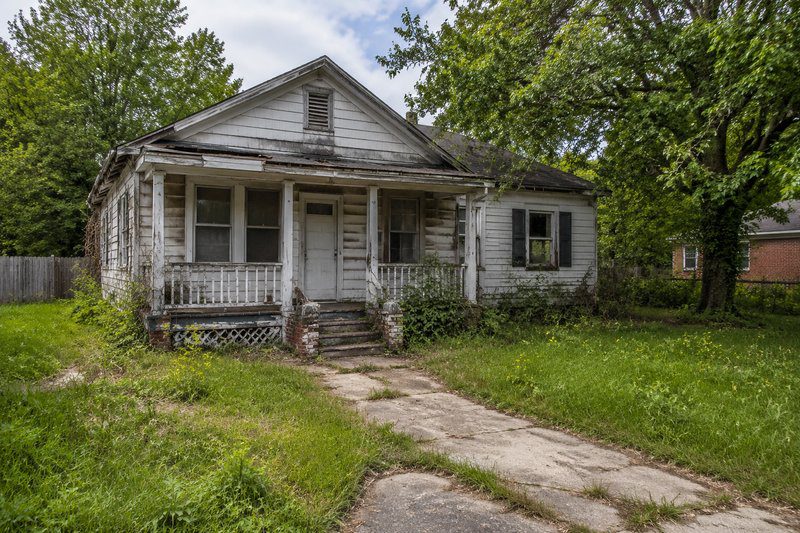

Every neighborhood has one. The ugly house. The house with the sagging porch, the overgrown yard, the grimy windows. Maybe that house is yours. Maybe it belonged to someone you loved, and life got in the way of keeping it up. Maybe a series of financial setbacks left you unable to maintain it as you wanted.
Whatever the backstory, you may be staring at a property that feels unsellable. You may even be asking yourself, “How will I be able to sell my ugly house?” It’s true: most homebuyers who go through the standard route of financing a home with a lender tend to pass on buying that ugly house on the market. However, this isn’t the case for cash buyers. In fact, cash buyers are often the most motivated buyers in the room.
Why Traditional Buyers and Lenders Walk Away
To understand why cash buyers want ugly homes, you first need to understand why conventional buyers don’t.
Traditional homebuyers who work with a real estate agent and a mortgage lender are looking for a home they can move into easily that requires only minor work. That means they rarely give a house listing with significant issues a passing glance. Even if they were to consider buying a property that needed extensive work, they would likely face roadblocks from their mortgage lender.
That’s because mortgage lenders require properties to meet minimum habitability standards. A home with a compromised roof, active water intrusion, or a failing electrical system will fail those standards. If the property doesn’t meet the lender’s habitability standards, the house will be labeled uninhabitable. The lender won’t approve the loan, and the deal will die, regardless of how motivated the buyer is.
FHA loans, which many first-time buyers rely on, carry even stricter property requirements. The same is true for VA loans. Peeling paint on a pre-1978 home, evidence of structural movement, and safety hazards of almost any kind can trigger mandatory repair conditions. If you can’t or won’t make those repairs, you’ve just lost access to a large segment of the buyer pool.
A Deep Dive into What Qualifies as Uninhabitable
You’ve likely heard the polite terms that the real estate industry has used to describe the ugly house in your neighborhood. Terms like “distressed,” “fixer-upper,” and “needs TLC.” Those phrases often mean the home has problems significant enough to deter traditional buyers, their lenders, or both.
These problems fall into a few broad categories. Cosmetic damage is the most obvious. Peeling paint, stained ceilings, warped floors, outdated kitchens, and overgrown landscaping all contribute to a first impression that stops buyers at the curb. Cosmetic issues rarely affect a home’s structural integrity, but they affect perception, and perception drives traditional buyer decisions.
Structural problems go deeper: a shifted foundation, a compromised load-bearing wall, a useless roof, or a moisture-damaged crawl space. All signal to buyers that the home requires serious investment before it’s livable.
System failures round out the picture. Issues like outdated or failed electrical panels, plumbing that no longer functions properly, HVAC systems that stopped working years ago, and septic systems past their capacity create conditions that make a home difficult or impossible to inhabit safely.
Any combination of these issues can tip a property from “fixer-upper” into “uninhabitable” in the eyes of a traditional buyer, an inspector, or a lender. But cash buyers see these properties through an entirely different lens.
What Cash Buyers Actually See in an Ugly Home
Homebuyers buying a house with cash operate entirely outside the traditional system. They fund their own purchases. They set their own property standards. They specifically look for homes that the conventional market has passed over. They’re not imagining themselves living there. They’re imagining what it could become and what it would take to get there.
Cash buyers and real estate investors evaluate ugly homes based on after-repair value, which is the estimated market price of the property once they’ve fully renovated it. They subtract the cost of repairs, their profit margin, and carrying costs from that number to arrive at a fair offer.
That process means they’re genuinely interested in properties that traditional buyers reject, such as homes with:
- Fire damage
- Storm damage
- Extensive mold
- Code violations
- Years of deferred maintenance
These are exactly the kind of opportunity they pursue. The worse the condition, the fewer competitors they face, and the more value they can create through renovation.
For you as a seller, that investor interest translates into a real offer on a property you may have assumed was worthless.
Common Situations Cash Buyers Handle Regularly
Cash buyers who specialize in as-is purchases have seen nearly every difficult scenario a property can present. A few come up more often than others.
Fire and smoke damage tops the list. After a house fire, the path to a traditional sale is long and expensive. Insurance payouts rarely cover the full cost of restoration. Smoke damage penetrates walls, insulation, and HVAC systems, requiring extensive remediation. Cash buyers factor all of that into their offer and take on the restoration themselves.
Hoarding situations present a different kind of challenge. A home that has been severely cluttered or damaged by years of accumulation can be structurally sound but effectively unsellable on the open market without significant cleanout and repair. Cash buyers purchase these properties as-is, contents and all, in some cases, removing the burden of cleanup entirely from the seller.
Vacant and abandoned properties deteriorate quickly. A home that has been sitting empty for a year or more may have water intrusion, pest infestation, vandalism, and vegetation encroachment, making it feel beyond saving. Cash buyers often specifically seek out vacant properties because they represent clear opportunities for value creation.
Inherited homes in poor condition are another common scenario. When a family inherits a property that an elderly relative lived in for decades without updates or maintenance, the gap between the home’s current condition and market-ready condition can be enormous. Selling as-is to a cash buyer closes that gap without requiring heirs to manage a renovation project during an already difficult time.
What You Can Realistically Expect From a Cash Offer
Selling an ugly home for cash means accepting a trade-off. The offer will reflect the property’s current condition, which means it will be lower than what the home might fetch after a full renovation. That’s the honest reality of an as-is transaction.
What you gain in return is significant. You skip the cost of repairs, which in a severely distressed property can run well into six figures. You avoid the months of contractor management, permit applications, and inspections that a renovation requires. You eliminate the risk of a buyer backing out, the appraisal falling short, or the lender imposing conditions you can’t meet.
A traditional sale may carry a higher list price, but the math doesn’t always favor it. Repair costs, agent commissions, and carrying costs add up fast. For many sellers, a discounted cash offer leaves more in their pocket.
How to Move Forward When Your Home Feels Unsellable
Start by getting a realistic picture of your property’s condition. You don’t need a formal inspection, but knowing the major issues gives you a clearer sense of what you’re working with and helps you evaluate any offer you receive.
Then reach out to cash buyers with verifiable experience in your market. Ask whether they’ve purchased homes in similar condition. Ask for proof of funds. Ask how they calculated their offer. A serious buyer walks you through their reasoning clearly and without pressure.
Check reviews and references. In an industry where unethical operators exist, a track record of completed transactions and satisfied sellers is the most reliable indicator of a buyer you can trust.
Your home’s condition doesn’t have to be its destiny. Ugly, damaged, and uninhabitable properties sell every day to buyers specifically motivated to take them on. The right buyer is out there, and they’re not waiting for you to fix anything first.
Video


Infographic
Homes needing major repairs often sit on the market because traditional buyers and mortgage lenders view them as too risky. This infographic explains why cash buyers are drawn to properties that are considered less desirable.